
AI Marketing in 2026: How AI Boosts Sales, Efficiency & Growth
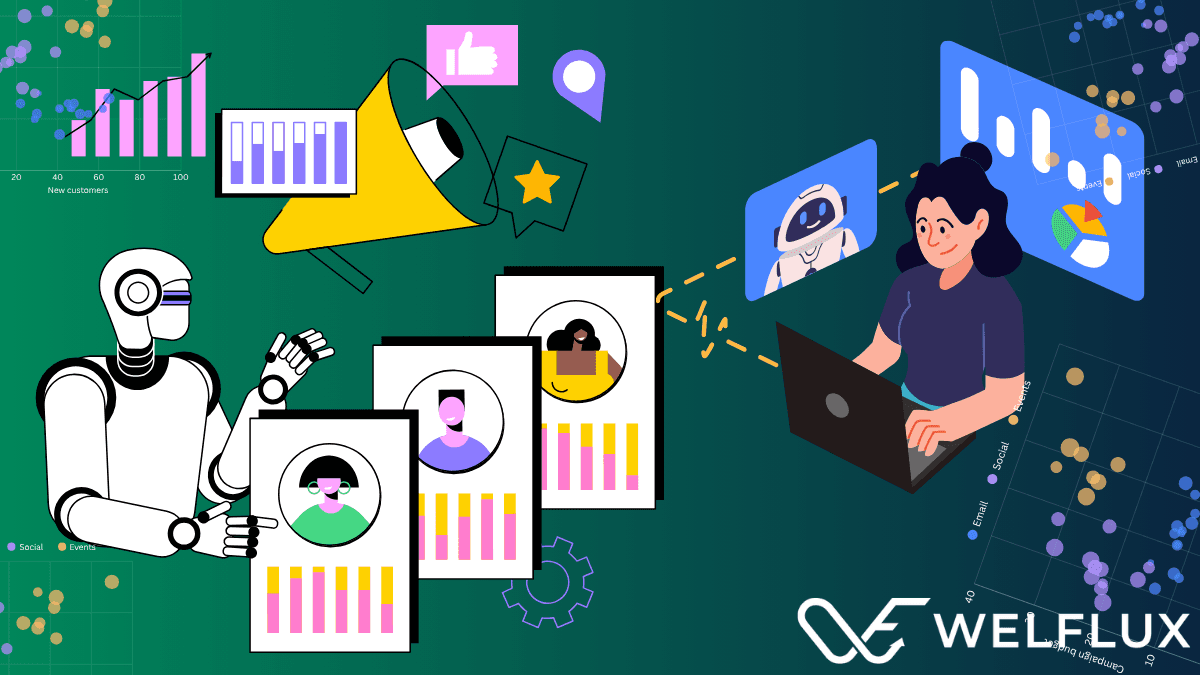
Artificial Intelligence is no longer a futuristic concept reserved for large technology companies. Today, AI marketing has become one of the most powerful tools available to businesses of all sizes. From startups and e-commerce stores to global brands, organizations are using artificial intelligence to automate tasks, personalize customer experiences, create content, optimize advertising campaigns, and increase sales.
The rapid growth of AI-powered tools has changed how marketers work. Tasks that once required hours of manual effort can now be completed in minutes. At the same time, businesses can gain deeper insights into customer behavior, allowing them to make smarter decisions and improve marketing performance.
In this guide, we will explore what AI marketing is, why it matters, how businesses are using it, and how you can implement AI marketing strategies to stay competitive in today's digital landscape.
What Is AI Marketing?
AI marketing refers to the use of artificial intelligence technologies to improve marketing activities, automate workflows, analyze data, and enhance customer experiences. Artificial intelligence can process large amounts of information faster than humans, identify patterns, predict outcomes, and generate content based on specific goals.
Rather than replacing marketers, AI helps them become more efficient by handling repetitive tasks and providing valuable insights. Examples of AI marketing include:
- AI-generated content creation
- Automated email marketing
- Personalized product recommendations
- Customer segmentation
- Predictive analytics
- Advertising optimization
- AI chatbots and virtual assistants
- Search engine optimization support
As AI technology continues to evolve, its role in marketing becomes increasingly important.
Why AI Marketing Matters More Than Ever
Consumer expectations have changed dramatically. Customers expect personalized experiences, fast responses, relevant recommendations, consistent communication, and seamless online interactions.
Meeting these expectations manually is becoming nearly impossible, especially as businesses scale. AI helps solve these challenges by enabling marketers to deliver personalized content at scale, analyze customer behavior quickly, improve decision-making, reduce operational costs, and increase marketing efficiency.
Businesses that adopt AI effectively often gain a significant competitive advantage over those relying solely on traditional methods.
Key Benefits of AI Marketing
Increased Efficiency
One of the biggest advantages of AI marketing is automation. Tasks such as content generation, social media scheduling, customer support, email campaigns, and data analysis can be automated, allowing teams to focus on strategy and creativity.
Better Customer Insights
AI systems can analyze customer data and identify patterns that may be difficult for humans to detect. This helps businesses understand customer preferences, purchase behavior, engagement trends, and audience interests. With better insights, marketers can make more informed decisions.
Improved Personalization
Personalization has become a critical factor in marketing success. AI allows businesses to deliver personalized product recommendations, customized email campaigns, dynamic website content, and tailored advertisements. This often leads to higher engagement and conversion rates.
Enhanced Decision-Making
AI-powered analytics tools can provide real-time recommendations and forecasts. Marketers can identify which campaigns perform best, which channels generate the highest ROI, and which audiences are most likely to convert. This reduces guesswork and improves overall performance.
Cost Savings
By automating repetitive tasks and improving efficiency, businesses can reduce operational expenses while maintaining or improving results.
How AI Is Transforming Content Marketing
Content marketing remains one of the most important digital marketing strategies. However, creating high-quality content consistently can be time-consuming. AI tools now assist with:
Content Ideation
AI can generate topic ideas based on industry trends, search demand, customer interests, and competitor analysis.
Content Creation
AI-powered writing tools can help create blog posts, product descriptions, email campaigns, social media content, and advertising copy. While human oversight remains important, AI can significantly speed up production.
Content Optimization
AI tools can analyze content and provide recommendations for SEO improvements, readability, keyword usage, and user engagement. This helps improve search visibility and overall content quality.
AI and Search Engine Optimization
SEO continues to evolve, and AI is playing a larger role in how businesses approach search optimization. AI-powered SEO tools help marketers discover keywords, analyze competitors, identify content gaps, optimize on-page content, and monitor rankings.
Modern AI solutions can process large amounts of search data and identify opportunities that may otherwise be missed. Businesses using AI-enhanced SEO strategies often gain a stronger online presence and improved organic traffic.
AI in Advertising
Digital advertising platforms generate enormous amounts of data. AI helps advertisers manage this complexity by automating key processes.
Audience Targeting
AI can identify high-value audience segments based on demographics, interests, purchase behavior, and online activity.
Ad Optimization
AI can continuously adjust bids, targeting, placements, and creative variations to improve campaign performance.
Performance Prediction
Predictive models can estimate campaign outcomes before a significant budget is spent. This helps businesses allocate resources more effectively.
AI-Powered Email Marketing
Email marketing remains one of the highest ROI marketing channels. AI enhances email marketing by personalizing content for individual subscribers, optimizing send times for when each user is most likely to open, and recommending subject lines, CTA placement, and content structure to increase engagement.
AI Chatbots and Customer Engagement
Customer expectations for instant communication continue to rise. AI chatbots help businesses provide 24/7 customer support, product recommendations, order assistance, and lead qualification. Modern chatbots are becoming increasingly sophisticated and capable of handling complex interactions. This improves customer satisfaction while reducing support costs.
Predictive Analytics and Forecasting
One of AI's most valuable capabilities is prediction. Predictive analytics helps businesses forecast future sales, customer behavior, churn risk, and marketing performance. By anticipating future outcomes, organizations can make proactive decisions rather than reacting after problems arise.
AI Marketing for E-Commerce Businesses
E-commerce companies are among the biggest beneficiaries of AI marketing. AI can improve:
Product Recommendations
Recommendation engines help increase average order value, cross-selling, and upselling opportunities.
Inventory Forecasting
AI can predict demand and help businesses manage stock more efficiently.
Customer Experience
AI enhances user experiences through personalized product suggestions, smart search functionality, and automated support. These improvements often translate into higher conversion rates.

Best Practices for Implementing AI Marketing
Start With Clear Goals
Before adopting AI tools, identify specific objectives such as increasing traffic, generating leads, improving conversions, or reducing costs.
Maintain Human Oversight
AI should support human expertise, not replace it entirely. Human review remains essential for brand consistency, accuracy, creativity, and strategic decisions.
Focus on Data Quality
AI systems rely on data. Poor-quality data often leads to poor outcomes. Invest in maintaining accurate and organized information.
Measure Performance
Track key metrics such as conversion rates, revenue growth, customer acquisition costs, and return on investment. Regular measurement helps ensure AI initiatives deliver value.
AI Marketing Opportunities in Key Markets
United States
Businesses in the United States face highly competitive digital markets. AI can help companies improve efficiency and maintain a competitive advantage through automation and personalization.
United Kingdom
Organizations in the UK are increasingly adopting AI-driven marketing to improve customer experiences and optimize digital advertising performance.
Canada
Canadian businesses can use AI marketing to scale efficiently while managing costs in competitive industries.
Australia
AI-powered automation helps Australian companies improve customer engagement and streamline marketing operations.
South Africa
South African businesses can leverage AI marketing to compete more effectively, improve digital visibility, and reach broader audiences without significantly increasing marketing budgets.
The Future of AI Marketing
The future of AI marketing will likely include more advanced personalization, improved predictive analytics, better content generation, enhanced customer interactions, and smarter automation systems. As technology evolves, businesses that embrace AI strategically will be better positioned for growth.
Rather than replacing marketers, AI will continue to serve as a powerful tool that amplifies human creativity, strategic thinking, and decision-making.
Frequently Asked Questions
What is AI marketing?
AI marketing involves using artificial intelligence technologies to automate, optimize, and improve marketing activities such as content creation, advertising, customer engagement, and analytics.
Is AI marketing suitable for small businesses?
Yes. Many AI marketing tools are affordable and can help small businesses increase efficiency and compete more effectively.
Can AI replace human marketers?
No. AI can automate tasks and provide insights, but human creativity, strategy, and judgment remain essential.
How does AI improve content marketing?
AI assists with content ideation, creation, optimization, and performance analysis, helping marketers produce better content more efficiently.
What industries benefit most from AI marketing?
Almost every industry can benefit, including e-commerce, SaaS, healthcare, education, finance, real estate, and professional services.
Conclusion
AI marketing is rapidly becoming a fundamental component of modern business growth. By automating repetitive tasks, improving personalization, enhancing customer experiences, and providing valuable insights, artificial intelligence helps organizations achieve better marketing results while operating more efficiently.
Whether you are a startup, an e-commerce store, or an established enterprise, adopting AI marketing strategies today can position your business for long-term success in an increasingly competitive digital world.
Written by
The WELFLUX Team
AI Marketing Engine